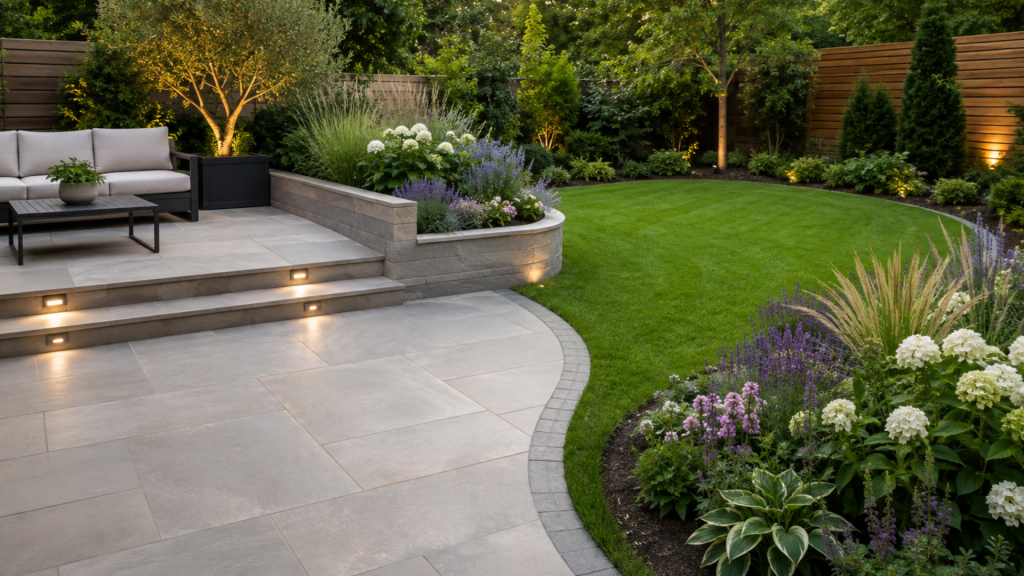
A new patio can give your garden a completely new structure, while fresh planting can bring it to life. But when these features are planned separately, the finished space can feel divided rather than complete. You may end up with a large paved area that looks too severe, crowded flower beds without clear access or beautiful features that do not connect.
The best garden design ideas combine hardscapes and softscapes right from the start. In addition to the framework of paths and patios, walls and edging, the natural surfaces of lawns, shrubs, trees and flowers soften and add natural character to the garden. There should not be any dominance between the two sides.
In this guide, you will learn how to select the right balance, connect materials with planting and create an outdoor space that feels valuable, welcoming and visually consistent throughout the year:
Understand What Each Side Brings
Hardscaping covers the trustworthy features that shape your garden and make it usable:
- Patios, paving and paths
- Steps, walls and raised beds
- Fencing, edging and gravel
- Pergolas and built-in seating
Softscaping has lawns, shrubs, trees, flowers and climbers. These are the features of life that provide shade, texture, colour and movement. You need both. A single element of hardscaping can be quite hard and planting without any structure can be messy. There is no perfect 50-50 break. The right balance depends on your garden, routine and taste.
Let Your Lifestyle Guide the Layout
Before choosing paving or plants, decide how you want to use the garden. Do you need outdoor dining, a children’s lawn, a quiet seating corner or an easy-care retreat?
A garden for entertaining may need a larger patio and clear paths. A restful space may include more planting, softer borders and shaded seating.
Professional garden landscaping in Birmingham can divide your garden into useful zones without making it feel chopped up. Each area should connect naturally with the next.
Choose One Main Hardscaping Feature
A balanced garden usually has one strong feature holding the design together. It might be a porcelain patio, a curved path, a raised seating area or a retaining wall.
Choose it first, then plan the planting around it. A patio can meet the lawn through a planted border, while a pathway can curve past shrubs instead of creating a hard divide.
Avoid too many materials. Brick, timber, gravel, porcelain and stone may all look attractive, but using everything together creates visual noise. Pick two or three finishes that suit your home and repeat them.
Soften Hard Edges with Planting
Hard materials create clear lines and edges. Planting blurs them, helping the garden feel relaxed and connected. Place ornamental grasses beside paving, low plants along paths or climbers against fences. Shrubs soften walls, while trailing plants suit raised beds.
Some of the easiest garden design ideas make a big difference. Let plants spill over an edge, add small planting pockets within paving or place pots near doors to connect your home and garden. You do not need to hide every hard surface. Stop those areas from feeling too sharp or separate.
Connect Colours and Textures
Your patio and plants don’t necessarily have to match, but they should feel like they belong together. Warm colours like deep green foliage, soft grasses and cream or purple flowers.
Cooler grey paving looks fresh beside structured shrubs, silver leaves and white flowers. Repeat materials in smaller details. Use the same timber for seating and raised beds or match the brick edging to your home.
It also works really well in compact gardens, where too many different colours can make the whole area feel visually smaller. These luxury garden design ideas for small spaces highlight how repeating finishes and layered planting give you that composed, polished feel.
Create Natural Transitions
A patio, lawn and flower bed should not resemble separate boxes. Gentle transitions make them flow together. Curved borders can follow paths, raised beds can sit beside seating, and trees near patios can provide height and shade. Lawn strips and large pots also connect hard and soft areas.
Notice what you see while moving through the garden. Matching edging or repeating a plant across different borders can make the design feel intentional.
Avoid Common Balance Mistakes
Your garden should work in the future as well as it does when first completed.
Avoid these regular mistakes:
- Covering too much space with paving
- Ignoring the mature size of plants
- Mixing too many colours and materials
- Forgetting drainage around patios and paths
- Leaving no clear route between areas
- Choosing features that need too much upkeep
For more advice, read the GOV-UK guidance on permeable surfacing. A successful layout stays practical as plants grow, seasons change and your needs develop.
Bring Structure and Nature Together
A balanced garden is not about choosing hardscaping over softscaping. It is about making them work as one design. Solid surfaces provide structure and useful space, while thoughtful planting adds warmth, colour and life. When your layout, materials and plants support each other, your garden becomes easier to use and more enjoyable to view.
For a beautifully tailored garden at your home, contact NDH Landscaping. Their team can create a balanced outdoor space that feels natural, useful and completely yours.